
Pressure Sensitive vs Contact Spray Adhesives: Complete Selection Guide
Posted by Austin Hardware on Aug 5th 2026
Pressure-Sensitive vs. Contact Spray Adhesives: Choosing the Right Bond for Your Application
Whether you're assembling trailer interiors, laminating RV wall panels, installing insulation, or fabricating industrial equipment, the adhesive you choose affects far more than whether two materials stick together. It influences production efficiency, labor costs, and the long-term performance of the finished product.
Pressure-sensitive adhesives (PSA) and contact adhesives are two of the most widely used spray adhesive options, but they're designed to solve different manufacturing challenges. Understanding how each works, and when each is the better choice, helps manufacturers improve productivity while building products that perform reliably for years to come.
Understanding the Two Types of Spray Adhesives
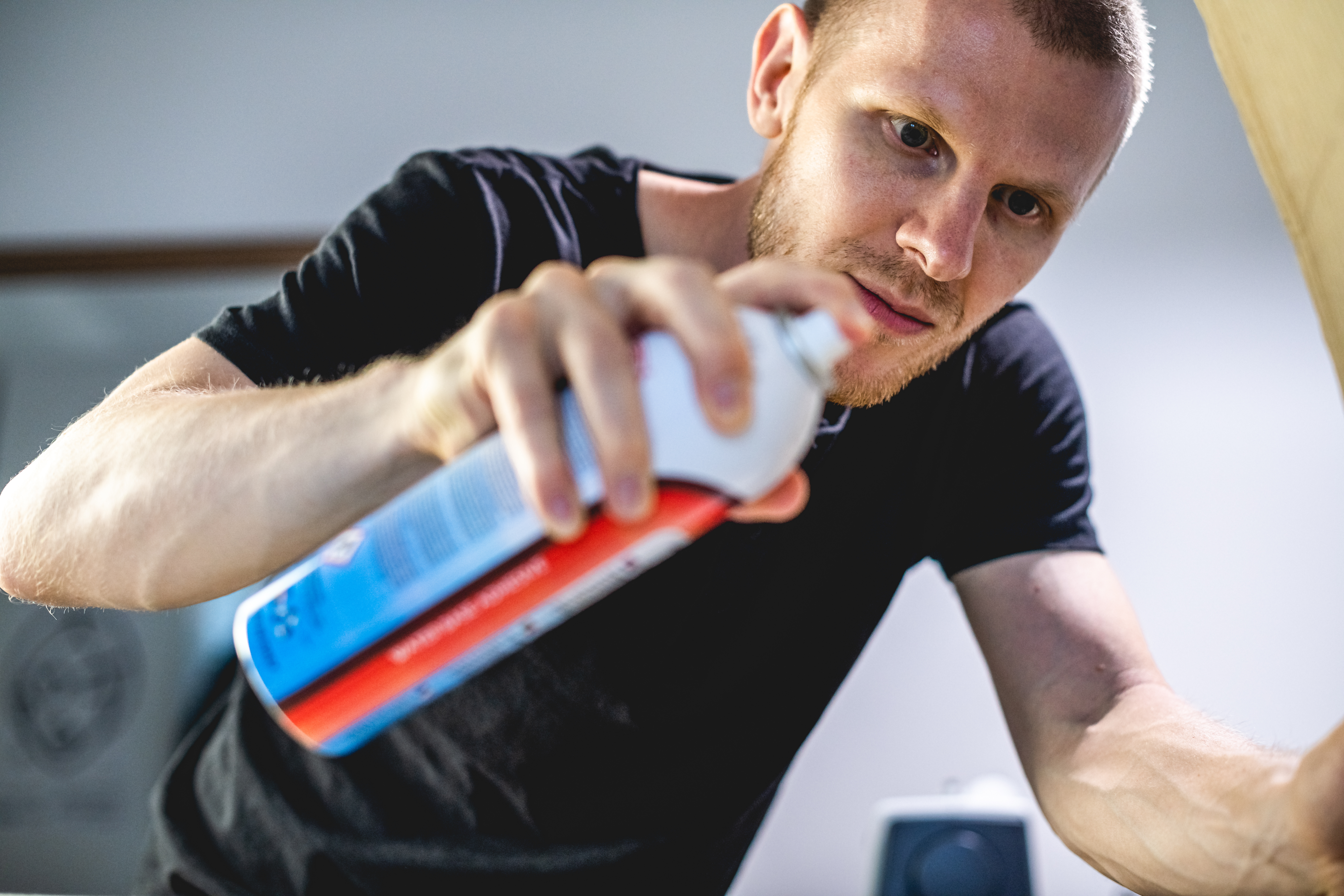
Although both products are applied with a spray pattern, they create a bond in fundamentally different ways.
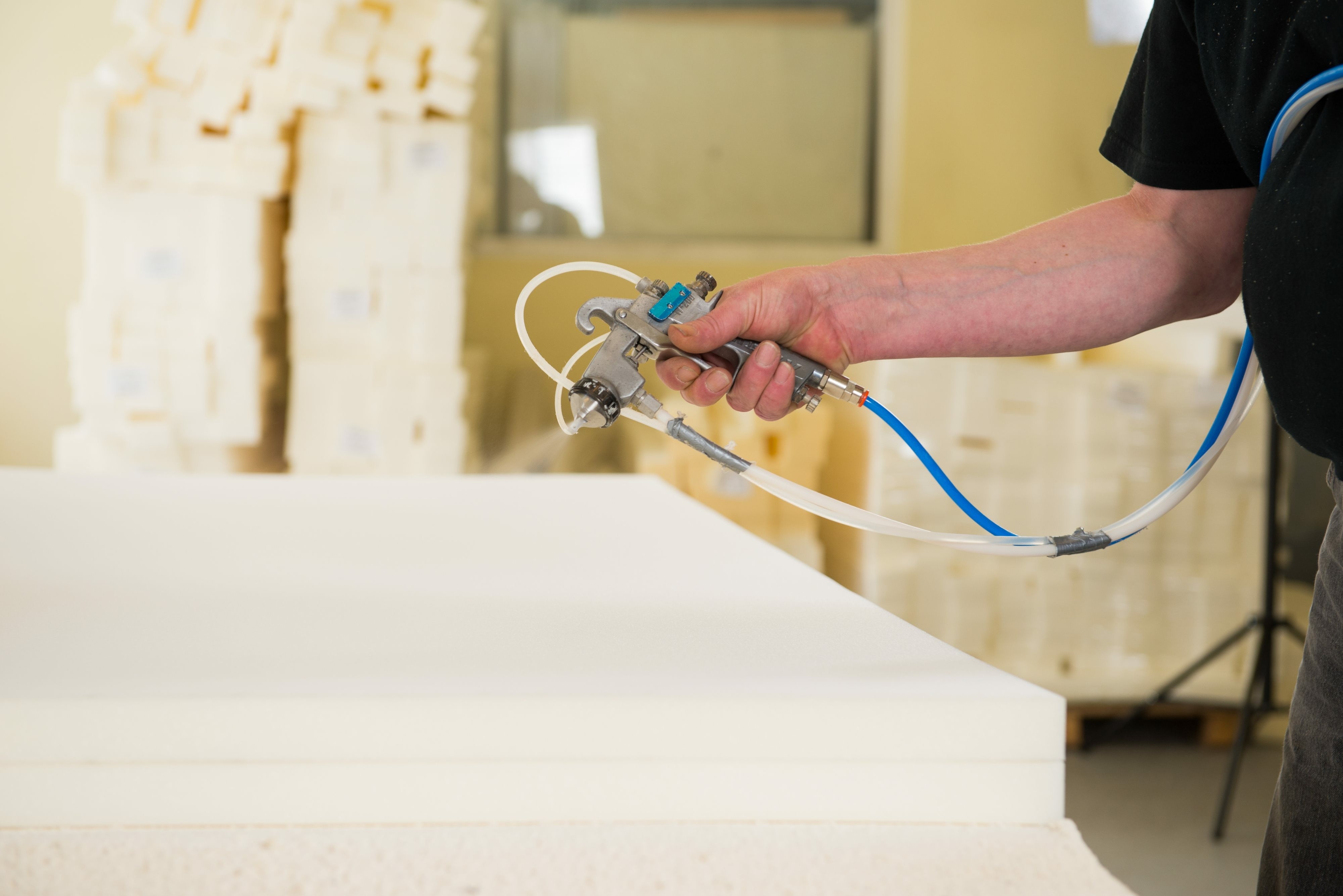
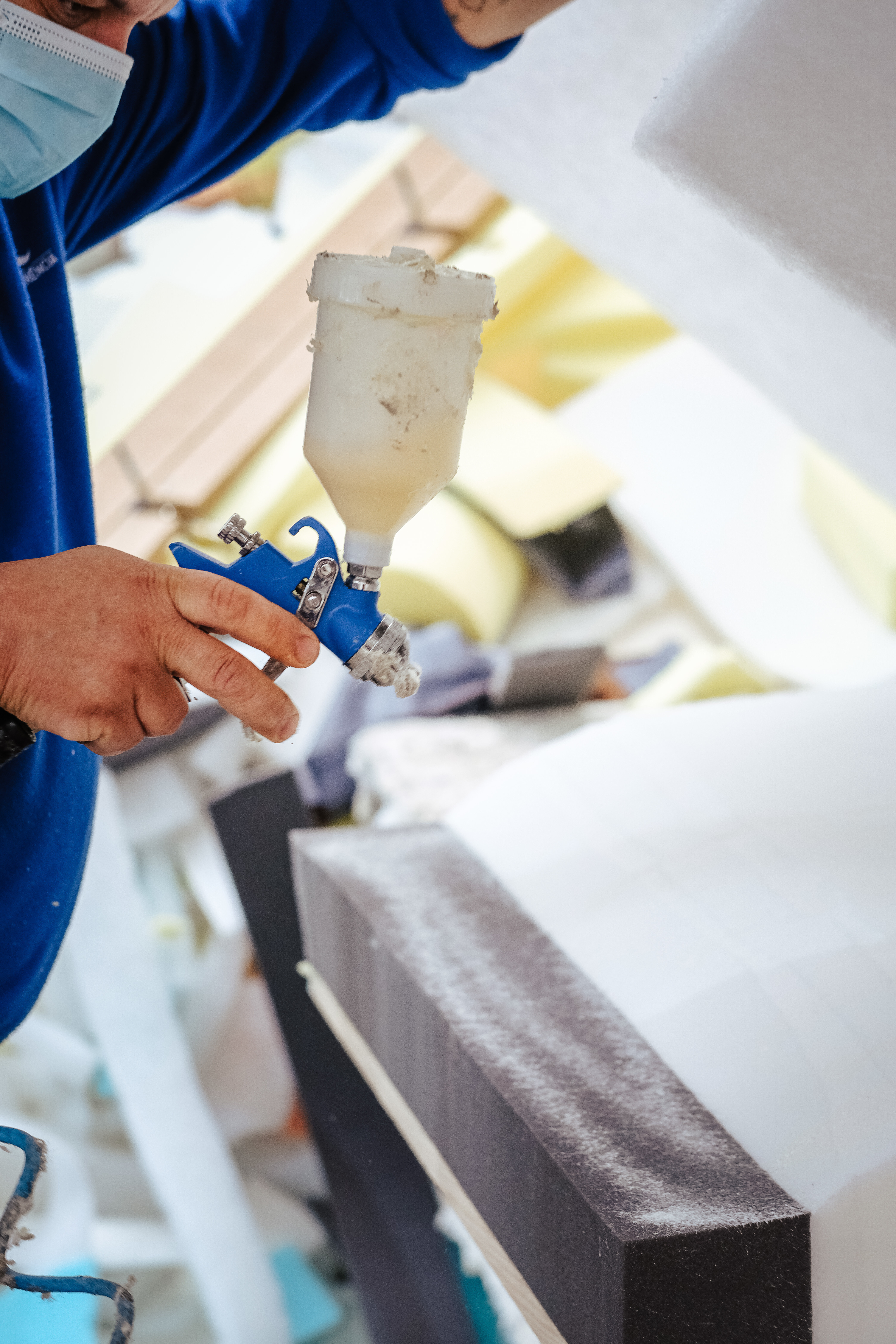
PSA spray forms an immediate bond when pressure is applied. Because only one surface typically needs to be coated, the process is fast and efficient, making pressure-sensitive adhesive products well suited for foam, insulation, fabrics, felt, labels, plastic films, and other lightweight materials. Eliminating the second application step reduces labor, speeds assembly, and allows many components to be handled almost immediately.
Contact adhesives take a different approach. They are applied to both mating surfaces before they’re joined together, creating a continuous adhesive layer across the bond line. That additional coverage distributes loads more evenly and provides greater resistance to heat, moisture, vibration, and long-term stress. For this reason, contact adhesives are commonly used for laminates, cabinetry, composite panels, rubber materials, metal components, and other demanding applications.
Rather than trying to make one adhesive handle every job, many manufacturers keep both technologies on hand and use each where it delivers the greatest value.
PSA vs. Contact Adhesive: A Side-by-Side Comparison
The comparison below provides a quick reference to the key performance differences between pressure-sensitive and contact spray adhesives. While every application is unique, these characteristics offer a practical starting point when evaluating which product is the better fit.
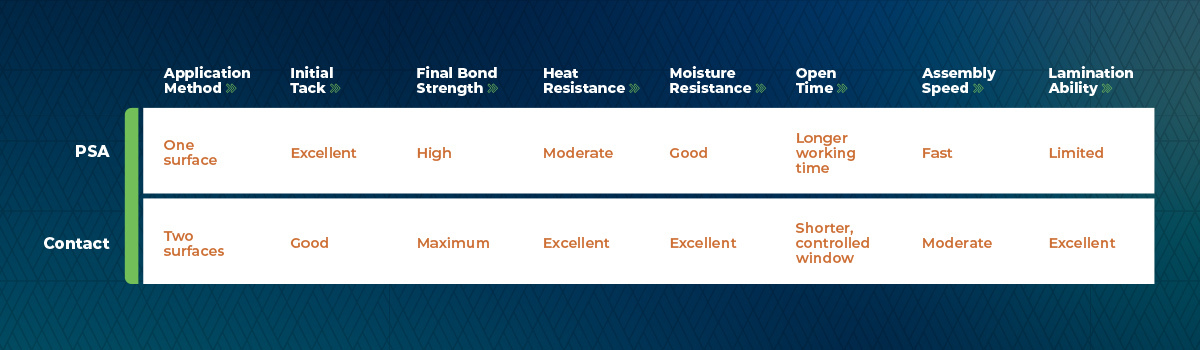
One specification that's frequently overlooked is open time, which is the amount of time the operator has to join the parts after the adhesive has been applied. Longer open times give operators more flexibility when positioning large panels, upholstery, or complex assemblies. Shorter bonding windows can improve consistency in repeatable production processes. Choosing the right open time helps balance installation flexibility with manufacturing efficiency.
Choosing the Right Adhesive
Selecting the right adhesive begins with understanding the application, not simply comparing product specifications.
Before deciding, consider the following:
- What materials are being bonded?
- What environment will the finished assembly experience?
- How much working time does the assembly process require?
- Which is the higher priority: production speed or long-term durability?
- What are the environmental and safety implications?
Answering those questions usually makes the appropriate adhesive choice much clearer.
Lightweight materials assembled in high-volume production often benefit from the speed and simplicity of pressure-sensitive adhesives.
Applications involving laminates, structural panels, cabinetry, or components exposed to heat, moisture, or vibration typically require the additional durability that contact adhesives provide.
Looking at the complete application, rather than focusing solely on the bond itself, helps prevent costly rework while improving long-term product performance.
Often, the environmental or safety implications of a spray adhesive are overlooked. Understanding this aspect can help you reduce your VOC’s, reduce the amount of PPE required, and increase the safety of your processes.

Real-World Applications
It's common for manufacturers to use both adhesive types on the same production line.
A trailer manufacturer, for example, may use PSA spray to install insulation, carpeting, or sound-deadening materials before switching to contact adhesive for laminated wall panels and composite assemblies. RV, marine, bus, and specialty vehicle manufacturers often follow a similar approach, using each product where its strengths best support the application.
Industrial manufacturers face many of the same decisions. Whether fabricating equipment, producing display fixtures, or assembling composite products, selecting the appropriate spray adhesive helps improve manufacturing efficiency while ensuring the finished product performs as intended.
Avoid the Most Common Selection Mistake
Initial tack is often the first characteristic people notice because it's immediately visible during assembly. But selecting an adhesive based on that first impression can lead to disappointing results once the finished product enters service.
Heat, moisture, vibration, and years of continuous use place very different demands on an adhesive that won't be seen in the few seconds after the initial bond. Evaluating the full operating environment, not just how quickly an adhesive grabs, leads to better product performance and fewer problems down the road.
The right adhesive isn't the one that bonds the fastest or holds the strongest. It's the one that performs reliably throughout the product's life.

Find the Right Bonding Solution
Austin Hardware supplies both pressure-sensitive and contact spray adhesives for transportation manufacturers, OEMs, fabricators, and specialty vehicle builders. Our team can help evaluate your application, production process, and EHS requirements to tailor the right adhesive to your product and process.
Whether you're optimizing an existing process or evaluating materials for a new design, Austin Hardware can help you identify the adhesive that best fits your application.