

Kitting vs Line-Side Inventory: Optimize Your Production
Posted by Austin Hardware on May 26th 2026
Kitting vs. Line-Side Inventory: What’s Best for Your Operation?
The way materials show up on your production floor can adversely affect your assembly line operations.
Not all at once, and not always obviously—but in small, repeatable moments. An operator pauses to find the right part. A bin runs empty sooner than expected. A workstation becomes just a little too crowded. None of it feels significant on its own. But together, those moments shape the pace and reliability of your entire operation.
That’s why the decision between kitting and line-side inventory can be very important. It’s not just about how parts are stored. It’s about how work really gets done, and how consistently and efficiently your team can do it well.
What is Line-Side Inventory?
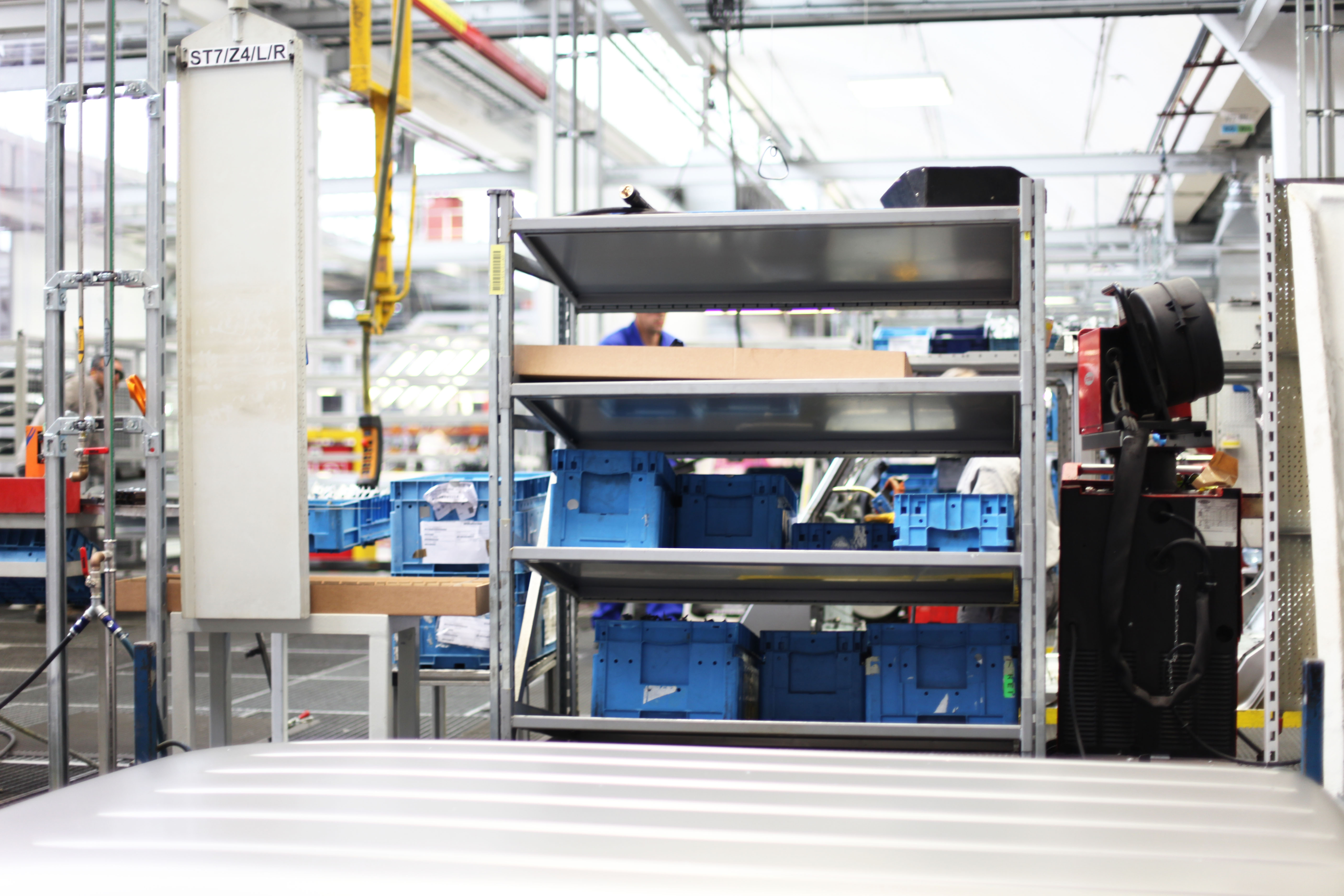
Line-side inventory remains the default approach in many operations because it reflects how processes have historically been structured. Components are stored in bulk near the production line, within arm’s reach, allowing operators to pull parts as needed during assembly.
The model appears efficient, eliminates wait time, removes dependence on pre-assembled kits, and avoids the need to forecast component usage precisely. This level of flexibility is particularly valuable in environments with frequent changes or high variability.
Over time, however, the tradeoffs become more apparent. Increased part volumes place pressure on available floor space. A growing number of bins increases the likelihood of selecting the wrong components. Additional time spent picking and searching introduces inefficiencies that gradually impact throughput.
Line-side inventory provides immediate access to materials, but it also transfers responsibility—and variability—directly to the production floor.

What is Kitting in Manufacturing?
Kitting approaches the same challenge from a different direction.
Instead of asking operators to gather what they need during assembly, kitting moves that effort upstream. Components are grouped in advance into job-specific kits, organized and delivered so that everything required for a build arrives together, ready to go.
When done well, kitting in manufacturing creates a different rhythm on the floor. Assembly becomes more focused. Movement is reduced. Decisions are simplified. Operators spend less time searching and more time building.
The benefits of kitting in manufacturing tend to show up relatively quickly, and include fewer errors, faster builds, and a cleaner, more controlled workspace.
However, kitting introduces its own demands, requiring accurate forecasting, disciplined processes, and confidence that what’s prepared upstream will match what’s needed downstream. When something is missing or incorrect, the disruption can be just as noticeable as the inefficiencies it aims to eliminate.
Kitting doesn’t remove complexity. It simply relocates it, requiring you to manage it earlier in the process.
Kitting vs. Line-Side Inventory: When to Use Each
The question of kitting vs. line-side inventory isn’t about choosing a better system. It’s about choosing where your operation can best absorb complexity.
If your builds change frequently, configurations vary from order to order, or engineering adjustments are frequent, line-side inventory often provides the flexibility needed to keep things moving. It allows your team to adapt in real time without being constrained by pre-built kits.
On the other hand, when production becomes more repeatable, and assemblies are consistent, component counts are high, and efficiency matters at scale, kitting begins to show its advantages. Standardizing how materials arrive reduces variability where it matters most: at the point of assembly.
In many ways, the decision comes down to whether it’s in your best interest to have your line operators solve problems in the moment or to follow a process that’s already been solved upstream.

The Hybrid Approach: Combining Kitting and Line-Side Inventory
In practice, most operations do not fall entirely on one side or the other.
Instead, they evolve toward a hybrid model. A hybrid model balances efficiency with flexibility. Core components that appear in every build are often kitted, ensuring consistency and speed. At the same time, more variable parts remain line-side, available when needed without overcomplicating the process.
This balance allows manufacturers to standardize what they can without overcommitting where they shouldn’t. Often, vendor-managed inventory (VMI) plays a supporting role here, helping maintain flow and availability across both systems. The result is a more adaptable operation that improves production line efficiency without becoming rigid.
The Hidden Costs to Consider
What makes this decision more complex is that the true costs aren’t always easy to see.
They don’t appear as a single line item. Instead, they’re embedded in daily activity, including in the time it takes to locate a part, the extra steps required to complete a build, and the rework caused by a simple mistake.
Labor spent picking and handling materials, excess inventory sitting unused, and floor space gradually consumed by growing part counts are the quiet drivers behind overall performance.
Whether you’re using kitting or line-side inventory, understanding these hidden costs is essential for meaningful inventory optimization for OEMs. Efficiency isn’t just about speed. It’s about how much effort it takes to maintain that speed over time.
Supporting Your Operation with the Right Strategy
At a certain point, the conversation shifts from systems to alignment. The goal isn’t simply to adopt kitting or refine line-side inventory. It’s to ensure that your material flow supports your production operations consistently, predictably, and without unnecessary friction.
That’s where the right support structure matters. Whether it’s building custom kitting programs, implementing vendor-managed inventory, or reducing SKU complexity, the goal is always the same: make it easier for your team to do their work as efficiently and effectively as possible.
The most effective systems are those that fit naturally into the operation and don’t require constant adjustment to maintain.
Finding the Right Fit for Your Production Floor
There’s no universal answer to kitting vs. line-side inventory, and there doesn’t need to be.
Every operation carries its own mix of complexity, variability, and production demands. The opportunity is to identify where inefficiencies exist today and decide where they can be reduced most effectively. When materials flow the right way, everything else tends to follow.
Not sure which model fits your operation? Contact your nearest Austin Hardware location to speak with our experts who can evaluate your production flow and discover where efficiency gains are being left on the table.