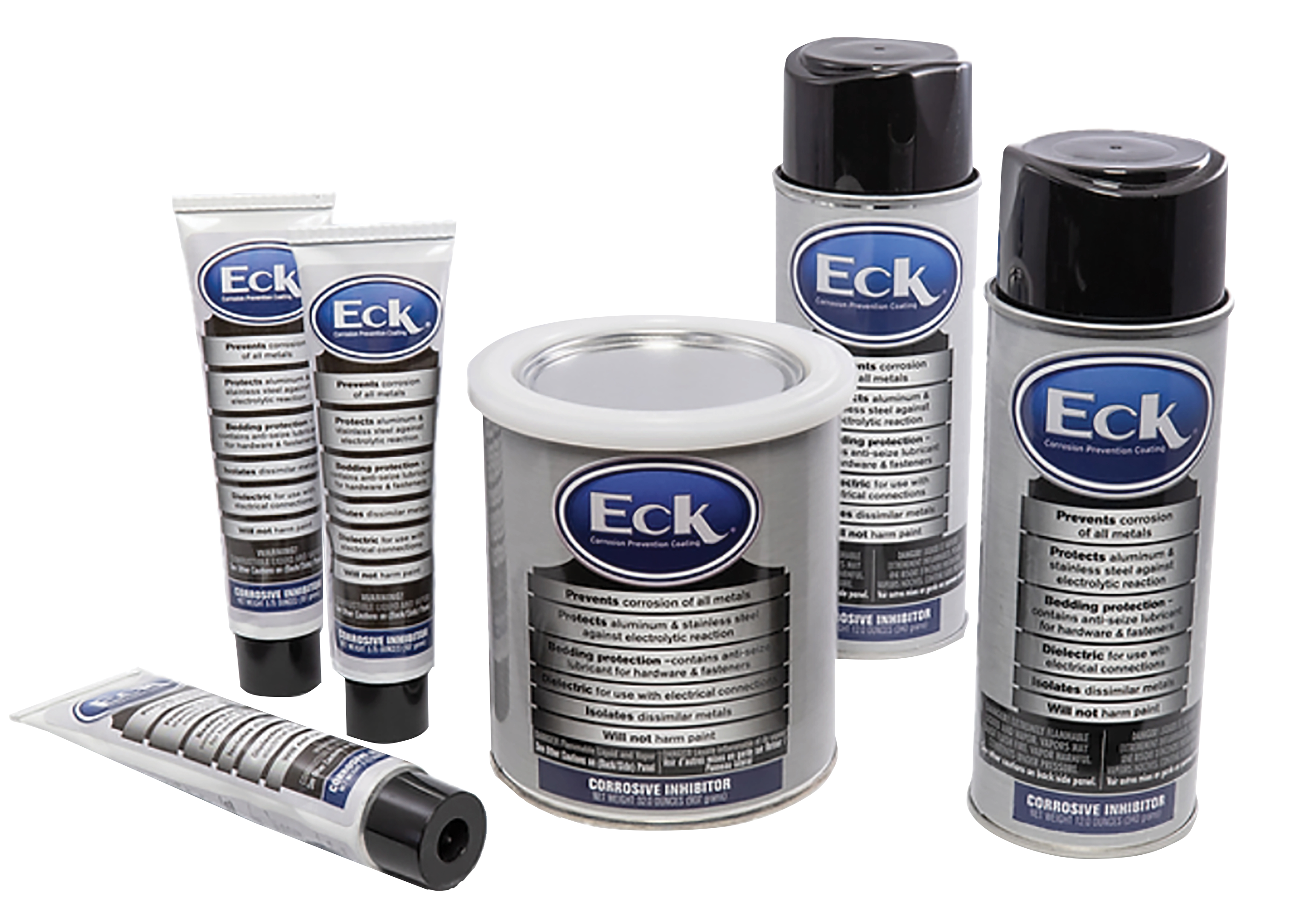
Where to Apply ECK for Maximum Corrosion Protection
Posted by Austin Hardware on Aug 31st 2026
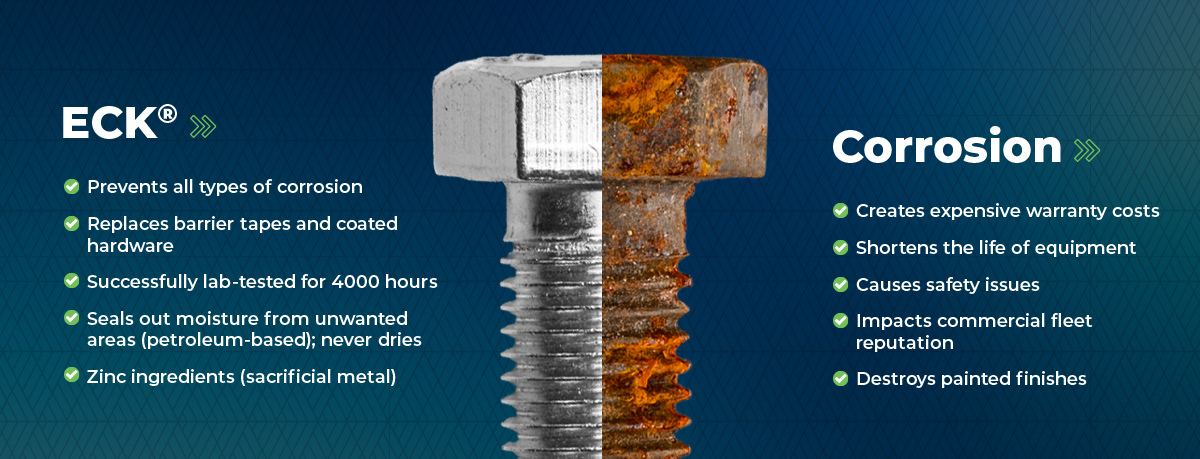
How to Apply ECK for Long-Term Corrosion Protection
Corrosion rarely starts where you can see it. It often begins inside a drilled hole, behind a bracket, or between two dissimilar metals that appeared perfectly protected during assembly. Months or even years later, those hidden areas can become the source of warranty claims, equipment failures, and costly repairs.
Most corrosion problems can be prevented before equipment ever leaves the production floor.
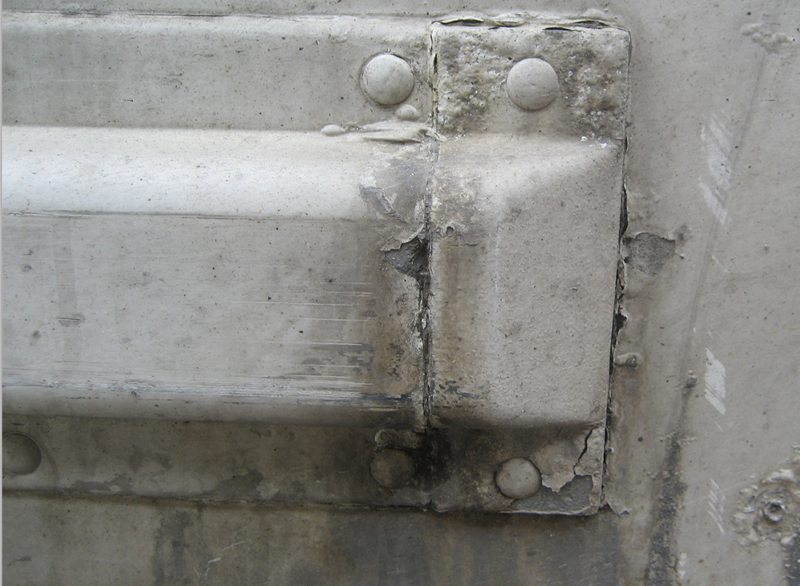
When applied correctly during assembly, ECK creates a protective barrier that helps isolate dissimilar metals, seal out moisture, and reduce the conditions that lead to galvanic corrosion. Knowing where and when to apply ECK is the key to long-term corrosion protection.
This guide explains the best practices for using ECK during OEM assembly, along with recommendations for maintenance, repairs, and other outdoor applications.
Editor's Note: The recommendations in this guide are based on insights from Rich Nay, Austin Hardware's ECK product specialist, whose years of experience supporting customers across a wide range of applications have provided firsthand insight into where corrosion commonly begins and how to prevent it during assembly.
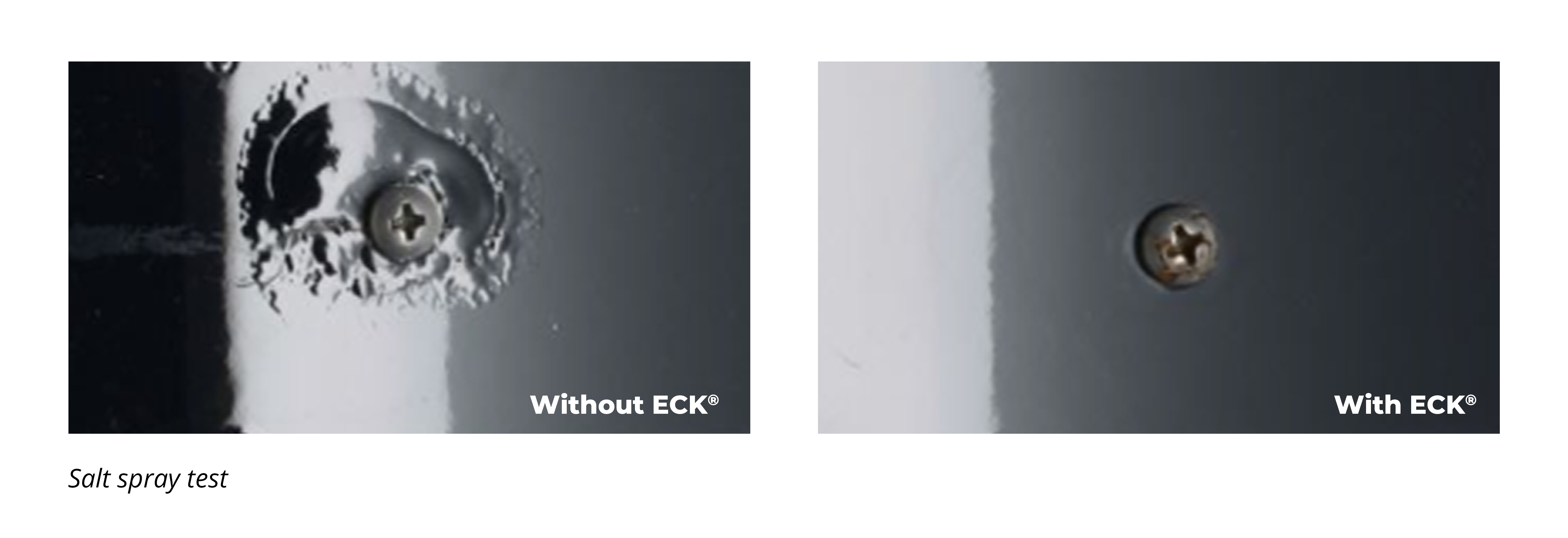
Why Assembly Is the Best Time to Prevent Corrosion
The best opportunity to prevent corrosion is before the equipment is assembled.
During production, every drilled hole, fastener, mating surface, and electrical connection is still accessible. Once the assembly is complete, many of those same areas are hidden behind hardware or enclosed within the structure, making them difficult or impossible to protect.
Applying ECK during assembly helps prevent galvanic reactions before equipment is exposed to rain, road salt, humidity, fertilizers, and other corrosive environments. Preventing corrosion during production is almost always easier and less expensive than repairing it in the field.
When Should ECK Be Applied During Assembly?
For the best protection, ECK should be applied immediately before components are assembled.
After drilling or machining, clean away all metal shavings and debris. Then apply ECK liberally to drilled holes, exposed metal, fastener threads, the underside of fastener heads, and any mating surfaces that will be hidden after assembly.
The objective is simple: completely separate dissimilar metals before moisture has an opportunity to reach them.
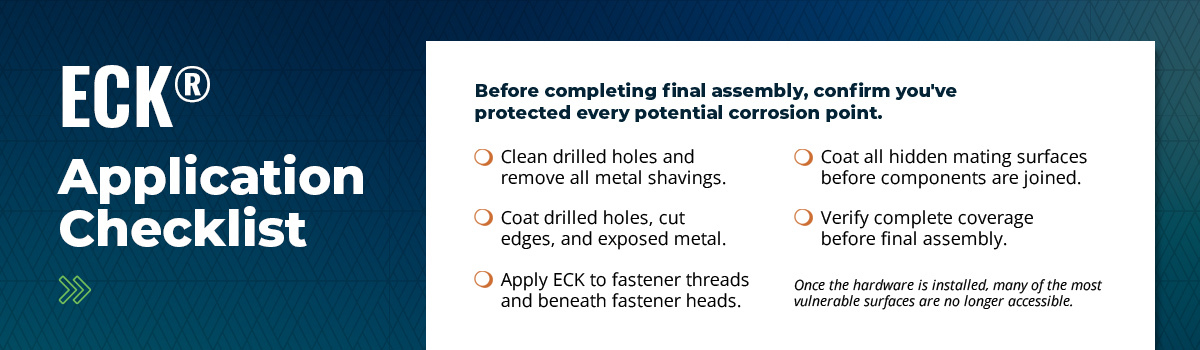
The Five Most Important Places to Apply ECK
While ECK should be applied anywhere dissimilar metals come together, five areas deserve special attention.
1. Drilled Holes and Exposed Cut Edges
Drilling removes the original protective finish and exposes bare metal. Applying ECK inside and around drilled holes helps protect these newly exposed surfaces before hardware is installed.
2. Fastener Threads and the Underside of Fastener Heads
Fasteners create natural pathways for moisture to enter an assembly. Coating the threads and the underside of fastener heads helps seal these areas while reducing direct metal-to-metal contact.
3. Hidden Contact Surfaces
Corrosion often begins where it cannot be seen.
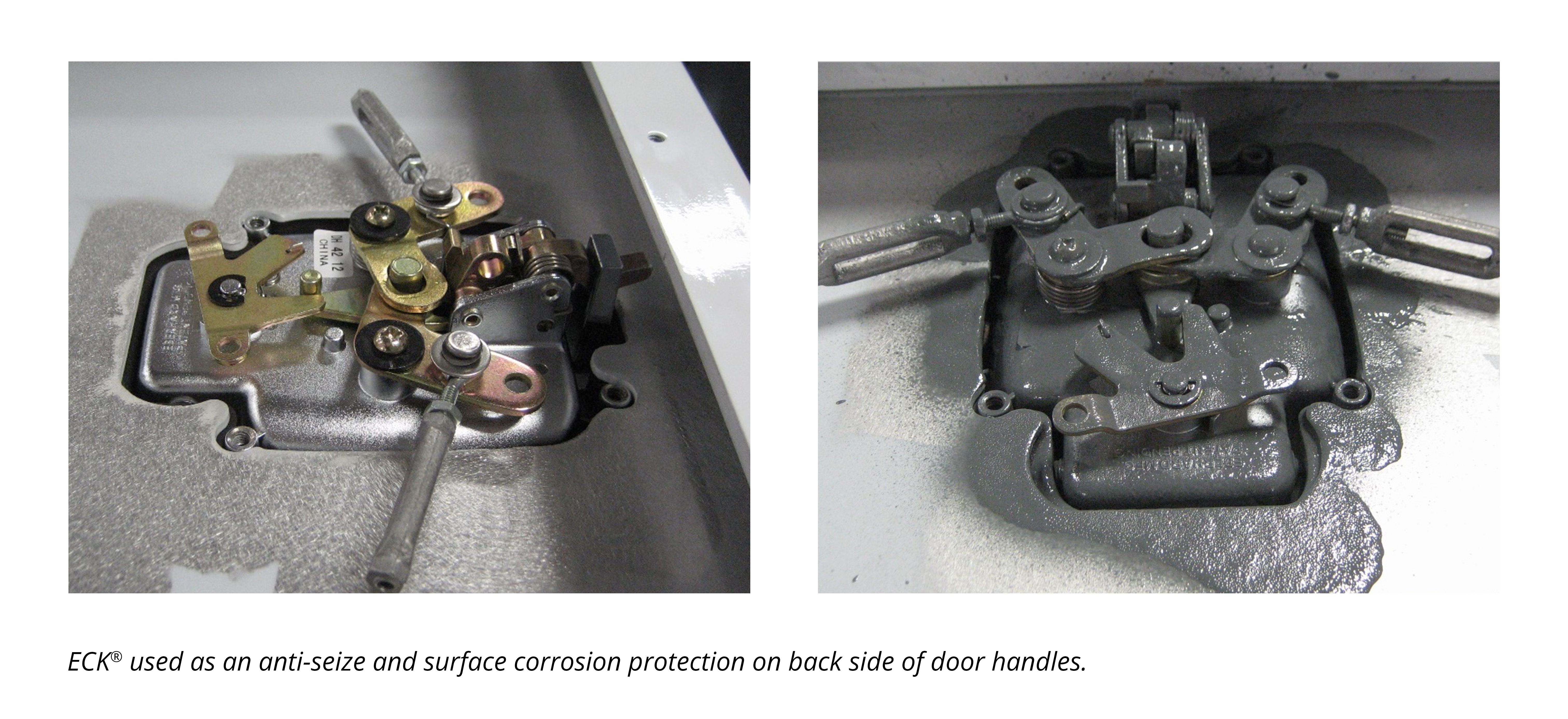
Apply ECK between brackets, hinges, handles, lights, trim, body accessories, and other mounted components before assembly. These hidden joints frequently trap moisture and are among the most common starting points for corrosion.
4. Electrical Connections and Grounding Points
Electrical connectors, terminals, and grounding locations are regularly exposed to moisture, condensation, road chemicals, and salt.
ECK's dielectric properties help protect properly assembled electrical connections without creating an unintended conductive path, reducing the likelihood of corrosion-related electrical failures.
5. Underbody Components and High-Exposure Areas
The underside of a vehicle or trailer is constantly exposed to water, mud, road salt, gravel, and chemicals.
Apply ECK generously anywhere moisture is likely to collect, particularly on aluminum-to-steel assemblies, stainless steel hardware, mounting brackets, and other components subjected to continual environmental exposure.
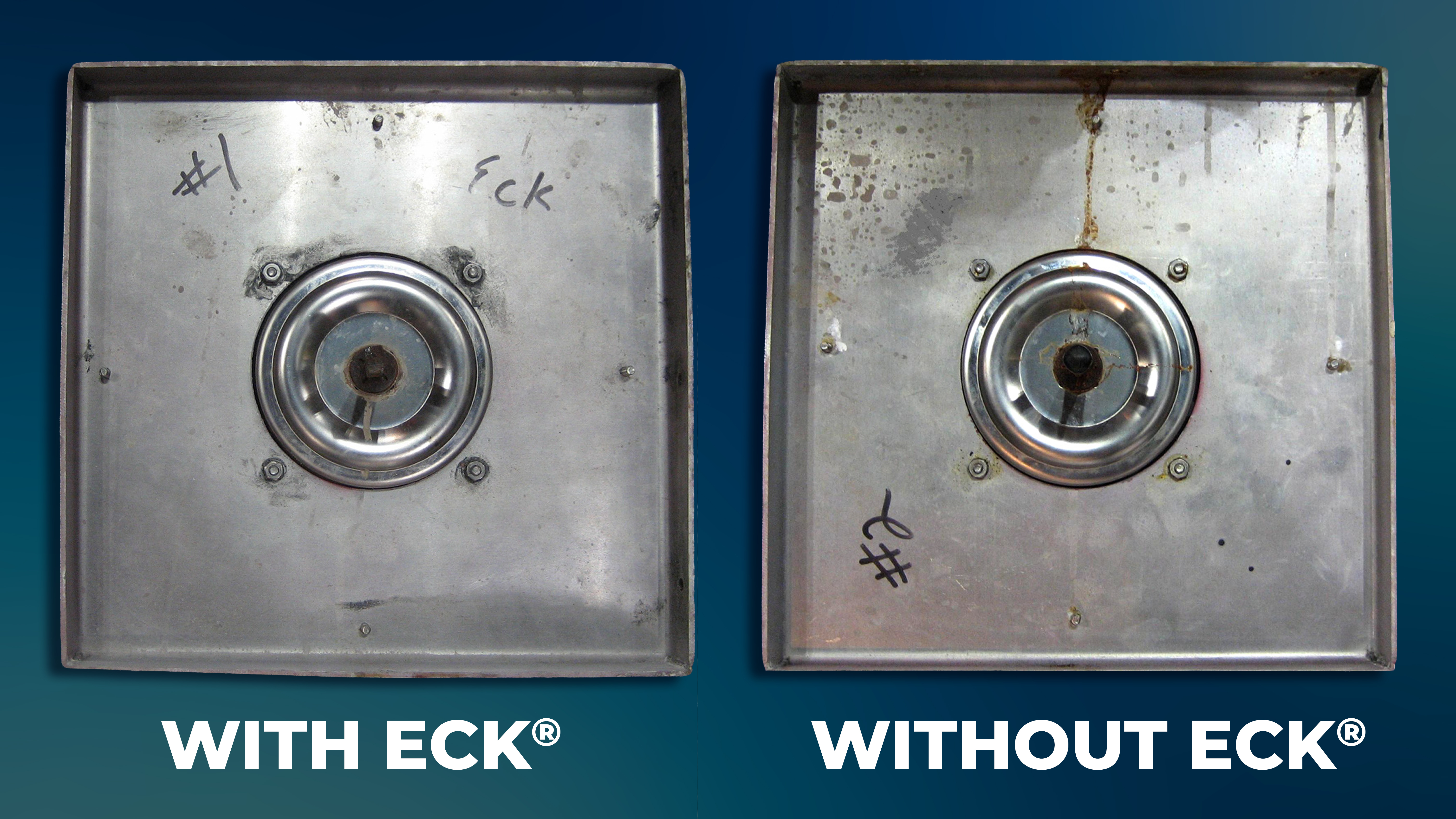
Common Application Mistakes That Reduce ECK's Effectiveness
Even the best corrosion protection depends on consistent application.
Common mistakes include applying too little product, missing drilled holes or fastener threads, overlooking hidden mating surfaces, and failing to protect repaired assemblies during reassembly.
Clear work instructions, employee training, and routine quality audits help ensure ECK is applied thoroughly and consistently across the production process.
Using ECK During Fleet Maintenance and Repairs
Although ECK delivers its greatest value during OEM assembly, it remains an effective solution for maintenance and repair work.
Remove existing corrosion, dirt, loose material, and metal shavings before applying the product. During reassembly, coat drilled holes, exposed metal, fastener threads, and mating surfaces before reinstalling the hardware.
While some vulnerable areas may no longer be accessible, proper application during repairs can still help extend equipment life and slow future corrosion.
ECK Applications Beyond OEM Manufacturing
The same principles apply anywhere dissimilar metals are exposed to moisture.
Fleet maintenance facilities, utility companies, agricultural equipment manufacturers, municipalities, marine operations, and repair shops all benefit from protecting critical assemblies during installation and repair.
ECK is also useful for consumer projects such as trailers, patio furniture, docks, decks, playground equipment, mailboxes, outdoor lighting, and other outdoor products assembled with exposed metal hardware.
What ECK Does, and What It Doesn't
ECK helps prevent corrosion before it starts. It is not intended to reverse existing corrosion.
For maximum effectiveness, clean surfaces thoroughly before application, ensure complete coverage of all contact areas, follow the product label, and verify compatibility when working with specialized materials or electrical components.
Corrosion Prevention Starts with Design
Corrosion is often viewed as a maintenance issue, but its greatest impact is determined during engineering and assembly.
Because corrosion-related warranty costs are rarely tracked separately, many manufacturers underestimate their true financial impact. Some companies have found that corrosion costs more than $1 million annually once repairs, replacement parts, downtime, and warranty claims are fully accounted for.
Making corrosion prevention part of the original assembly process helps reduce those costs while improving long-term equipment durability.
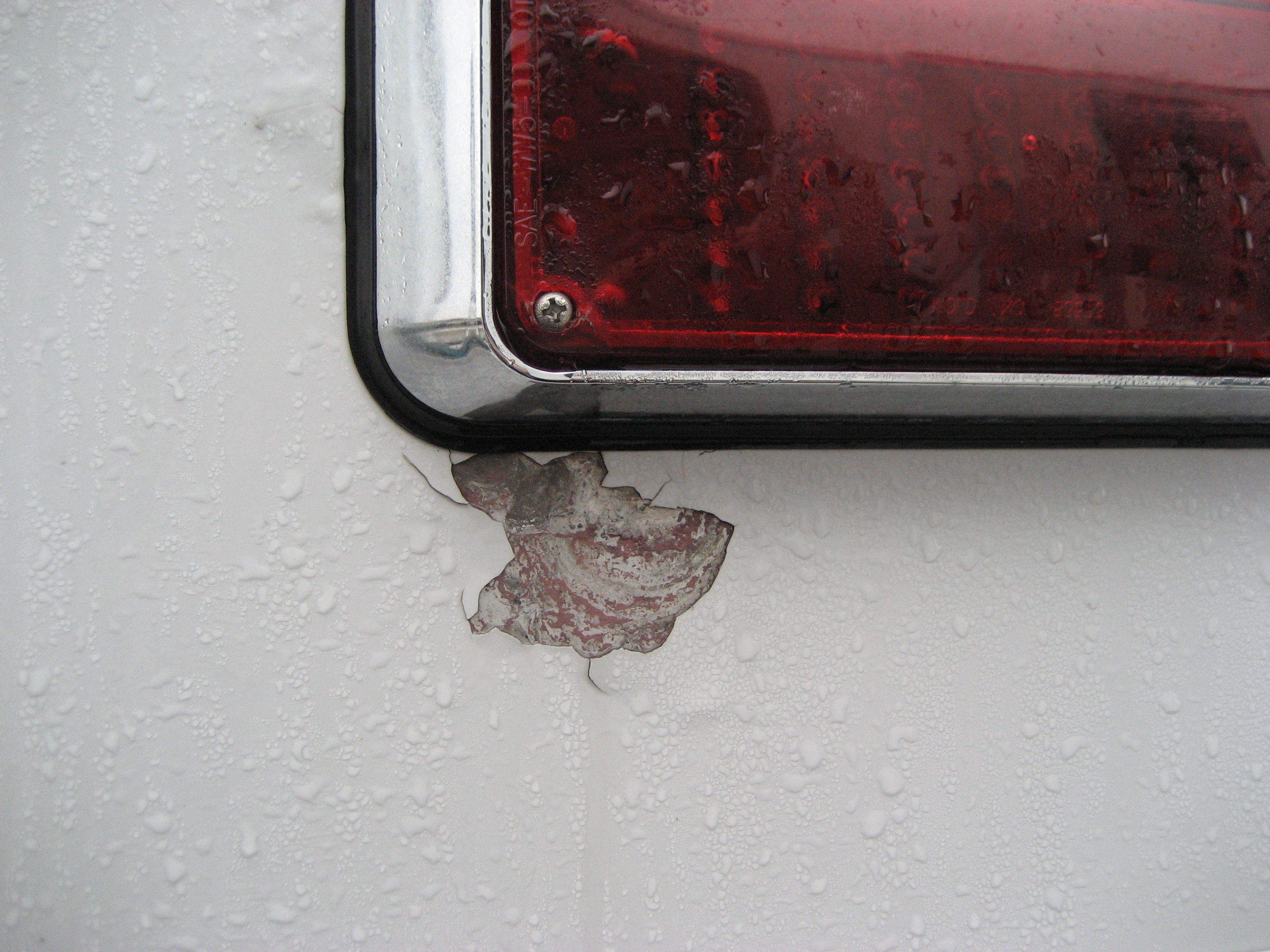
The most effective corrosion protection is built into the product before it enters service.
By applying ECK before assembly, protecting hidden contact surfaces, coating fasteners and drilled holes, and following consistent application procedures, manufacturers can significantly reduce corrosion-related failures and improve long-term reliability.
The recommendations in this guide reflect the same best practices Austin Hardware shares with manufacturers every day.
If you're looking for help selecting the right ECK products or developing a corrosion-prevention strategy for your operation, our team is ready to assist.