
How to Select a Southco® Latch
Choosing the right latch starts with understanding how the enclosure, panel, or equipment needs to operate and the conditions it must withstand.
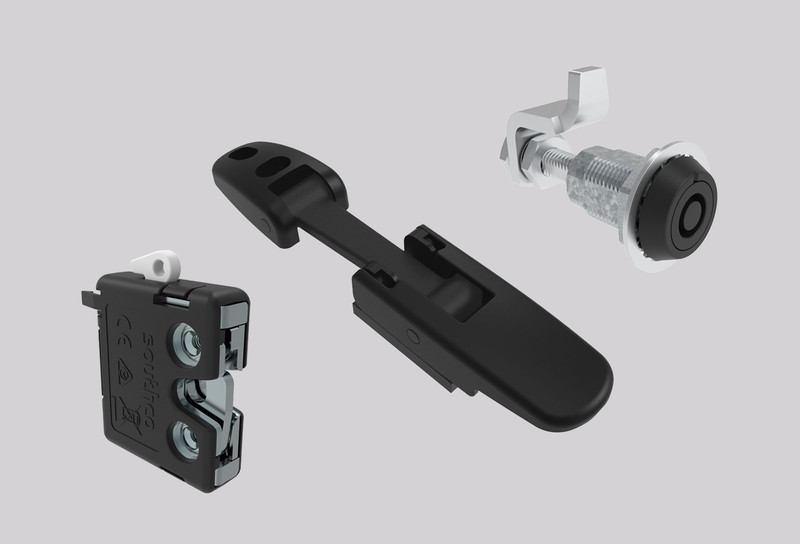
SOUTHCO LATCH SELECTION GUIDE
| Application Requirement | Latch Technology | Why | Southco Solution |
|---|---|---|---|
| Simple quarter-turn access | Cam latch | Provides straightforward quarter-turn operation for quick access to a panel or enclosure. | E5 Cam Latches |
| Sealing and vibration resistance | Compression latch | Applies controlled compression to help secure the panel and maintain pressure against a gasket or sealing surface. | E3 VISE ACTION Compression Latch |
| Push-to-close operation | Rotary latch | Engages a striker as the panel closes, allowing the user to push the panel into the closed position. | R4-25 Rotary Latches |
| Strong pull-down clamping | Draw latch | Uses a mechanical lever action to pull two surfaces together and create a strong, secure closure. | 37 Lever Assist Latch |
| Lever-operated access | Lever latch | Provides an integrated lever for convenient operation when a larger, more accessible handle is preferred. | C2 Lever Latch |
| Electronic or remote access | Electronic rotary latch | Combines rotary latching with electronic actuation for remote or controlled access. | R4-EM Electronic Rotary Latch |
| Multi-point closure | Multipoint latching system | Allows multiple points of the enclosure or door to be secured through a coordinated latching system. | M4 Modular Latching System |
| Locking or controlled access | Locking or padlockable latch | Adds a locking or controlled-access option when limiting or managing access is important. | E5 Cam Latches |
Use the guide as a starting point, then narrow the selection based on the specific requirements of your application. A representative solution may offer several configurations, so verify the specific product specifications before making a final selection.
WHAT TO CONSIDER WHEN SELECTING A SOUTHCO LATCH
HOW WILL THE LATCH OPERATE?
Start with the way the latch needs to function in everyday use. Will it be operated with a key, tool, knob, lever, or handle? Does the application require quarter-turn operation, push-to-close functionality, or remote or electronic access?
The operating method can quickly narrow the available latch options and help determine the right type for the application.
IS COMPRESSION OR SEALING REQUIRED?
If the latch needs to compress a gasket or maintain pressure against a panel, a standard cam latch may not provide the required function.
Compression latches are designed for applications where controlled compression and secure closure are important, including applications exposed to vibration or where sealing performance is a consideration.
HOW MUCH CLAMPING FORCE IS REQUIRED?
Some applications simply need a panel held securely in the closed position. Others require the latch to pull two surfaces together with greater force.
Draw latches can be a useful starting point when an application requires a strong mechanical pull-down action. Consider the required force along with the materials, panel construction, and operating conditions.
HOW MUCH SPACE IS AVAILABLE?
A latch may have the right operating characteristics but will not be suitable if it does not fit the available space.
Before choosing a latch, consider panel thickness, mounting depth, available clearance, latch and handle dimensions, keeper location, and required grip range.
These factors can help narrow the available configurations and should be verified against the manufacturer's specifications before installation.
WHAT ENVIRONMENTAL CONDITIONS WILL THE LATCH ENCOUNTER?
The operating environment can affect material and finish selection.
Consider exposure to moisture, chemicals, dirt, temperature extremes, outdoor conditions, and vibration. Select material and finish options based on the conditions the latch will encounter during service.
HOW FREQUENTLY WILL THE LATCH BE OPERATED?
An access panel opened occasionally may have different requirements than those opened repeatedly throughout the workday.
Operating frequency, ergonomics, and ease of access can all influence the appropriate latch design. For frequently accessed equipment, consider how easily the latch operates and how securely it holds the panel.
DOES THE APPLICATION REQUIRE SECURITY OR CONTROLLED ACCESS?
If unauthorized access is a concern, consider whether the latch needs to lock, be padlockable, be key-operated, or integrate with another access-control system.
Identify security requirements early because they can significantly narrow the available latch configurations.
The selection guide provides a starting point, but choosing a specific Southco latch requires matching it to the application's complete requirements. Identify the right latch technology, verify dimensions, grip range, mounting requirements, materials, finish, and performance specifications to ensure the selected product fits the application.
Need more help choosing the right latch for your application? Our team of access hardware experts is here to help.
FEATURED SOUTHCO LATCHES
NEED HELP SELECTING THE RIGHT LATCH?
If you know the basic requirements of your application but aren't sure which latch configuration is the right fit, Austin Hardware can help narrow down the options.