
Torque vs. Tension: Understanding Two Proven Approaches to Structural Fastening
Posted by Austin Hardware on Feb 17th 2026

Torque vs. Tension: Understanding Two Proven Approaches to Structural Fastening
Structural joints rely on one critical factor to perform safely and consistently over time: clamp load. Whether you’re building trailers, heavy equipment, or other industrial assemblies, achieving the correct clamp force plays a significant role in joint integrity, fatigue resistance, and long-term performance.
Across industries, engineers rely on two proven approaches to achieve clamp load: torque-controlled fasteners and direct-tension fasteners, including Huck® swaged fastening systems. Rather than viewing one as a replacement for the other, it’s more effective to understand how each works, when to use them, and how they support modern structural fastening systems. Choosing the right industrial fastener ultimately leads to stronger joints, fewer failures, and more reliable performance.
What Is Clamp Load and Why Does It Matter
Clamp load is the force that holds joint members together once a fastener is installed. When properly achieved and maintained, clamp load helps prevent joint separation, reduces fatigue, and improves the overall durability of the assembly.
There are two primary ways to create clamp load in industrial fastening:
- Torque-based fastening, which applies rotational force to generate tension.
- Direct-tension fastening, which applies a controlled tensile load directly to the fastener.
Understanding the relationship between clamp load and torque is critical when evaluating fastening solutions for demanding applications such as trucking, trailers, and heavy equipment.
How Torque-Controlled Fasteners Achieve Clamp Load
Torque-controlled fasteners generate clamp load by applying rotational force to a bolt, which indirectly creates tension in the fastener. This method is widely used because it is familiar, flexible, and cost-effective across a wide range of industrial fastening solutions.
However, torque-based systems are sensitive to variables such as:
- Thread and bearing surface friction
- Tool calibration and operator consistency
- Surface conditions and lubrication
Because of these factors, torque-controlled joints may require periodic inspection and re-torque to maintain clamp load over time. Even so, torque fastening remains a reliable option for general structural assemblies where accessibility and adaptability are priorities.
How Direct-Tension Fasteners Work
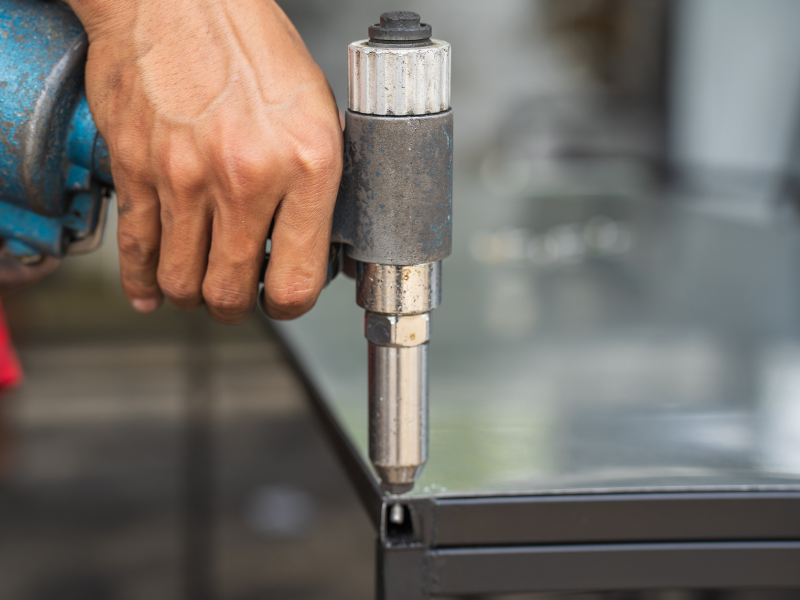
Direct-tension fasteners, including Huck® fastener technology, achieve clamp load using a fundamentally different approach. Instead of relying on torque, the installation tool applies a precise tensile load directly to the fastener pin. As the load is applied, the collar is swaged into the pin grooves, locking the joint at a predetermined clamp force.
This process delivers:
- Highly repeatable clamp load
- Visual confirmation of proper installation
- Reduced sensitivity to friction and surface conditions
Because clamp force is built into the system, there is no need to measure or verify torque during installation. This makes direct-tension fasteners especially valuable in applications where consistency, safety, and long-term performance are critical.
Performance Considerations in High-Demand Applications
Choosing between torque-controlled and direct-tension fastening systems is less about superiority and more about application fit.
In environments with:
- High vibration
- Fatigue-sensitive structures
- Safety-critical assemblies
- High-volume production lines
Vibration-resistant fasteners, such as Huck® swaged systems, are often specified for their repeatability, long-term joint performance, and reduced maintenance requirements.
At the same time, many assemblies continue to perform successfully with traditional bolts. Design loads, operating environment, production volume, and inspection access all influence the most effective fastening strategy. The best structural fastening system is the one that aligns with how the joint is expected to perform throughout its service life.
Long-Term Joint Performance and Inspection
From a maintenance perspective, torque-based and direct-tension systems differ significantly.
Torque-controlled joints may require:
- Scheduled inspection
- Re-torque to maintain clamp load
- Ongoing monitoring of joint integrity
By contrast, direct-tension fasteners use locked collars that provide visual confirmation of installation, which can reduce inspection frequency and maintenance costs in many designs.
Huck BobTail® fasteners represent an evolution of direct-tension technology. By eliminating the pintail break, BobTail® fasteners offer cleaner installation, improved ergonomics, and more consistent clamp load. These benefits support long-term joint reliability and more efficient maintenance programs across transportation and industrial applications.
Torque vs. Tension at a Glance
| Feature | Torque-Controlled Fasteners | Direct-Tension (Huck®) Fasteners |
| Clamp Load Method | Indirect via torque | Direct tensile load |
| Installation Feedback | Torque reading | Visual collar lock |
| Sensitivity to Friction | Higher | Lower |
| Maintenance Needs | Periodic inspection/re-torque | Reduced inspection in many designs |
| Typical Applications | General structural assemblies | High-vibration, fatigue-critical structures |
Choosing the Right Fastener for Your Application
Selecting the right fastening solution means looking beyond the fastener itself. Consider:
- Load requirements
- Vibration exposure
- Production volume
- Access for installation and inspection
- Long-term maintenance expectations
No single fastener fits every application. That’s why Austin Hardware supports a full range of industrial fastening solutions—from standard bolts, nuts, washers, and rivets to advanced Huck BobTail® fasteners, direct-tension fasteners, and vibration-resistant fastening systems used throughout trucking, trailers, heavy equipment, and industrial manufacturing.
Combined with fastening tools, service support, and supply chain programs, this allows OEMs to choose solutions that align with both design intent and production efficiency.
Ready to Explore Your Options?
Whether you’re evaluating torque vs. tension fastening, exploring how Huck fasteners work, or selecting fastening solutions for heavy equipment or trailers, the right choice starts with expert guidance.
Connect with an Austin Hardware fastening specialist today to reduce rework, improve joint reliability, and optimize your production process. Visit the Austin Hardware Support Center to access engineering support, tool service, VMI/CMI programs, and custom fastening solutions tailored to your application.